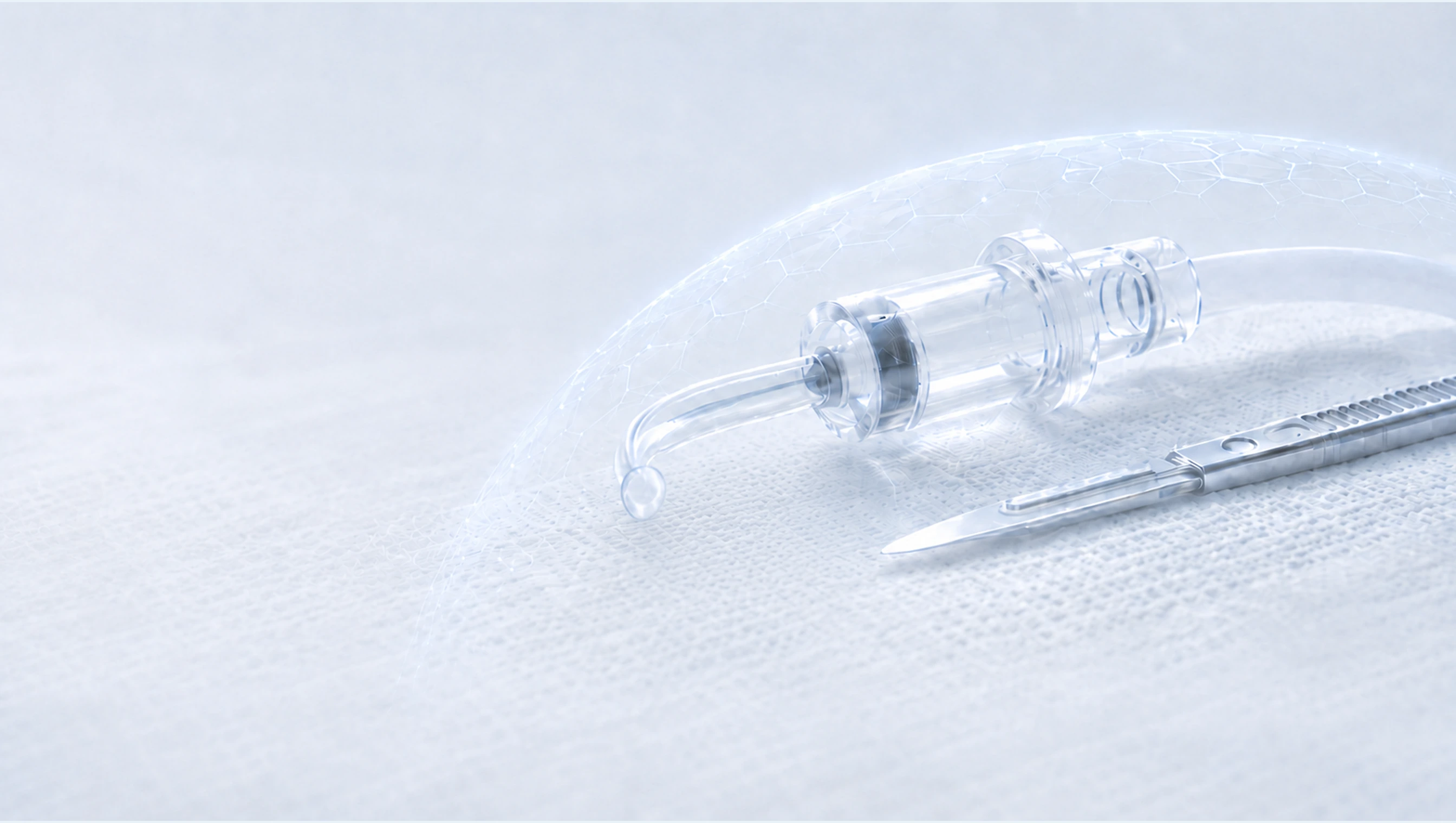
NanoFlashing Medical Device
The body has an immune system.
The medical device inside it does not.
A catheter, screw, plate or replacement joint enters the body as a passive surface. Once implanted, it cannot be routinely cleaned. If bacteria reach it, they can attach and grow unseen.
The numbers show the scale. About 75% of hospital-acquired urinary infections are linked to catheters. Researchers in Innsbruck found bacteria on implants from 32 of 57 patients who had no symptoms or signs of infection. And when a replacement joint becomes infected, the reported five-year mortality rate reaches 15% to 25%.
Antibiotics are supposed to be the backup. Resistance is making that backup less certain.
The body can defend itself. The device cannot.
The body can defend itself. The device cannot.
The NanoFlashing Medical Device has a permanent positive polarity, a fixed positive charge. The device captures and destroys up to 99.99% of viruses, bacteria and fungal spores through a physical mechanism, with no power and no chemicals.
Validation