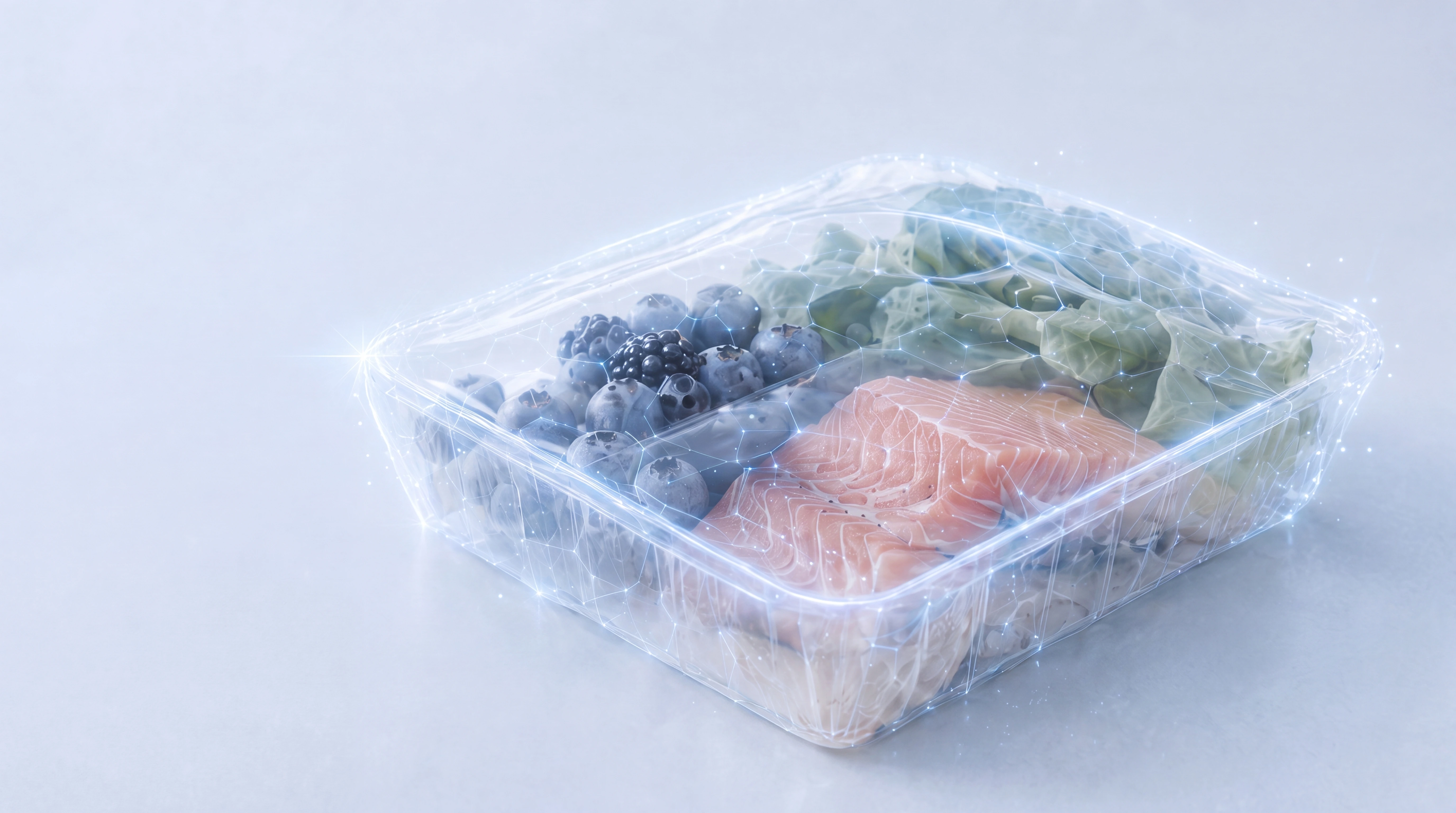
NanoFlashing Food Packaging
Conventional gas-filled food packaging slows the bacteria that make meat spoil. But the package itself does nothing to destroy pathogens that reach its surface. At Cornell, scientists added Listeria to minced raw chicken in commercial-style gas packaging. After 3 weeks under refrigeration, Listeria had multiplied nearly 1 million times; the gas suppressed ordinary spoilage bacteria but did not stop Listeria.
Pathogens may be present before the package closes: FDA inspectors investigating a Colorado packing facility found food residue on equipment after cleaning; the 2011 outbreak killed 33 people. The FDA says refrigeration does not kill most bacteria and Listeria can multiply near 0°C. Cardiff Metropolitan University monitored 43 household refrigerators for about a week; none stayed at 5°C or below throughout.
So the package can suppress the bacteria that warn us food is spoiling, while a dangerous pathogen keeps growing unseen.
Nothing warns you.
NanoFlashing Food Packaging changes the role of the package itself. It has a permanent positive polarity, a fixed positive charge. The packaging captures and destroys up to 99.99% of viruses, bacteria and fungal spores through a physical mechanism, with no power and no chemicals.
ValidationStrawberry Test
Three strawberries held at 26°C for thirteen days. One stored in a glass jar, one wrapped in polyester, and one wrapped in NanoFlashing Food Packaging.